Source Sun Shade Canopy Tent Poles for Camping, Beach, and Tarp
Find 30 sun shade canopy tent poles for camping, beach, and tarp applications. Compare adjustable telescoping aluminum options with rubber grips and custom sizes. Source lightweight, waterproof structures from verified manufacturers; compare the available evidence and request quotations based on your requirements.
Key considerations
Products List




Comprehensive Sourcing Guide
Sun Shade Canopy Tent Poles Sourcing Guide
Sourcing sun shade canopy tent poles for retail, promotional, or outdoor-program use starts with understanding how interchangeable poles, tarp poles, and complete canopy systems sit within one product family. The listings reviewed here cluster around adjustable telescoping aluminium poles and matching shade structures, which means buyers can often consolidate two categories—replacement poles and finished canopies—with a single supplier. This consolidation matters commercially: shared tooling, shared raw material (aluminium alloy), and shared packing workflows typically improve pricing leverage and reduce incoming inspection complexity.
Before issuing a request for quotation, define your specification boundary clearly. Decide whether you need poles only, pole-and-fabric kits, or finished canopies with branding. The listings show both poles and fabric shelters carry customization and logo options, so clarify early whether your logo applies to poles, carry bags, fabric panels, or all three. Ambiguity at the quotation stage is the most common cause of rework costs, sample disputes, and missed seasonal windows in the outdoor shade category.
Product Scope and Observed Listing Signals
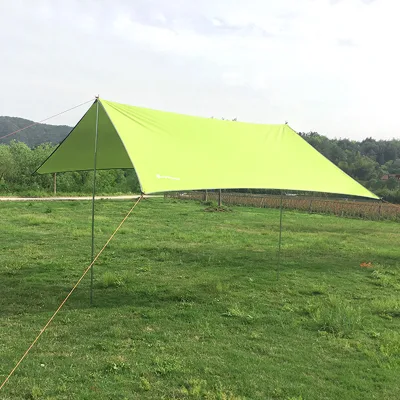
The observed listings span two linked product groups. The first is dedicated tent and tarp poles—models such as FTP01—described as adjustable telescoping, lightweight, made from Aluminium 6061 with rubber grips, sized from roughly 35.43 to 90.55 inches, and packed two pieces into a carry bag with silver/black or custom colors. Sample MOQ starts at 2 pieces, with 200 pieces indicated for bulk orders. The second group is finished shade products, including beach sunshades (model SS-01) and pop-style tents (HJO23302) with polyester fabric, waterproof indexes above 3000 mm, and quick-opening structures.
Buyers should treat these attributes as per-listing observations, not guarantees across an entire catalog. Price ranges in this category span from trivial sample-level figures to several thousand dollars depending on configuration, and MOQs range from single samples to tens of thousands of pieces depending on the product line. Always confirm which listing a quotation references, because a pole SKU and a canopy SKU under the same supplier may carry entirely different MOQ logic, tooling costs, and packing specifications.
Technical Specifications to Verify
For poles, verify material certification and dimensions against your drawings. Aluminium 6061 is the stated alloy, but request confirmation of temper, wall thickness, and tube diameter, since telescoping performance depends on tolerance between sections. Confirm adjustable length range against the stated 35.43–90.55 inch (roughly 0.9–2.3 m) span, and check which of the listed standard lengths—2.3 m, 2.5 m, or 3 m—applies to your configuration. Rubber grip composition, locking mechanism type, and end-fitting styles (square centre-pole tops are listed) all affect field durability and should be physically tested on samples.
For fabric products, verify the stated parameters: 190T polyester fabric, waterproof bottom index above 3000 mm, UV-resistant and sun-proof treatments, and structural details such as double-skin construction, ridge or square centre-pole tops, and quick automatic opening mechanisms. Sizes listed include 210×150 cm, 210×210 cm, and 300×280 cm with custom options, plus a 16″×16″ accessory dimension and a 6 lb weight reference. Ask which attributes apply to which model, and request pre-production samples matching your final specification, not catalog samples.
Compliance and Safety Documentation
Aluminium and fabric outdoor products sold in most developed markets require documentation even when the products themselves are simple. For poles, ask for material composition declarations confirming the 6061 alloy claim, and verify whether any destination-market chemical regulations apply to coatings, anodizing, or rubber grip compounds. For canopies and sunshades, request test evidence for the claimed waterproof index and UV-resistance performance—do not accept marketing language as substitutes for laboratory reports issued against recognized test methods relevant to your market.
Do not assume certification exists; the listings reviewed do not state certification status, so buyers must request documents directly and verify report authenticity with the issuing laboratory where stakes are high. For products marketed toward families or beach use, confirm small-parts, sharp-edge, and stability considerations appropriate to your channel requirements. If your retail customers demand specific compliance files, name those requirements in the purchase contract and tie payment milestones to document delivery, not just to goods shipment, to avoid last-minute documentation gaps.
Cost Drivers and Commercial Terms
Pole and canopy costs move with aluminium market prices, tube diameter and wall thickness, telescoping section count, and finish type. Fabric cost drivers include polyester denier and coating weight, waterproof treatment level, frame material (flexible poles versus aluminium alloys are both listed), and structure complexity—double-skin and quick-opening designs cost more than basic shelters. Customization adds cost through logo printing, custom colors, and bespoke packaging such as the two-pieces-per-bag pole packing or OPP-bag-and-carton canopy packing shown in the listings.
On commercial terms, note the observed spread: sample MOQ of 2 pieces and bulk MOQ of 200 pieces for poles versus a 1000-piece MOQ on certain canopy listings, with prices across the catalog ranging widely by configuration. Confirm whether quoted prices include printing, custom bags, and export packaging. Agree sample fees, sample lead times, and whether sample costs are credited against bulk orders. For seasonal goods like summer beach products, lock production windows early, since capacity tightens ahead of peak season and delays compound at retail.
Supplier Qualification and Quality Control
Qualify suppliers through a structured sequence rather than price comparison alone. Start with a written capability check: confirm in-house telescoping tube processing, fabric cutting and sewing capacity, and whether customization (explicitly listed as available, with ODM/OEM design support on some listings) is performed internally or subcontracted. Request references for the specific product type you are buying—a strong canopy maker is not automatically a strong pole extruder. Verify production location details; the reviewed listings indicate Anhui, China origin for pole products.
For quality control, define an inspection protocol before the first bulk order: incoming material checks on aluminium tubes and fabric rolls, in-process checks on locking mechanisms and seam quality, and pre-shipment inspection with an agreed sampling plan. Test telescoping cycles, grip adhesion, pole straightness under load, canopy setup/collapse repetition, and waterproof performance on randomly selected samples. Require the supplier to correct and re-inspect after any failed lot, and document everything—verbal assurances carry no weight in disputes.
Long-Term Procurement Checks
Long-term value comes from consistency, not just the first shipment. Track defect rates by lot and by failure mode—locking failures, tube denting, seam leakage, color fading—and share this data with your supplier in regular reviews. Confirm that custom components, such as your logo printing plates, carry bag designs, and custom color standards, are retained and version-controlled so repeat orders match the approved golden sample. Re-confirm material certifications annually, since alloy sourcing and fabric coating suppliers can change without notice.
Also monitor commercial stability: whether stated standards (2.3 m/2.5 m/3 m pole lengths, custom canopy sizing, documented packing formats) remain honored across reorder cycles, and whether MOQ flexibility for samples and replenishment orders persists. Build dual-sourcing contingency for peak season by qualifying a second supplier against the same specification, even if volumes remain concentrated with the primary. Finally, revisit specifications each off-season—incremental improvements to locking systems or fabric coatings negotiated during quiet months often deliver better margins than aggressive annual price negotiation alone.
FAQs
What materials are used for sun shade canopy tent poles?
These poles are made from aluminium 6061 alloy with a rubber grip section, offering a lightweight yet sturdy structure for outdoor use. Aluminium 6061 resists corrosion and handles repeated setup well. Some related tent designs list flexible poles or aluminium alloys as the pole material, and fabric canopies typically use 190T polyester for the shade cover.
How adjustable are the telescoping canopy tent poles?
The poles are adjustable telescoping types that extend from 35.43 inches up to 90.55 inches, letting you set the canopy height for sun angle or headroom. Common stocked lengths follow 2.3m, 2.5m, and 3m standards. The twist-style adjustment keeps setup quick, and custom lengths can be discussed with the supplier for special canopy designs.
What is the minimum order quantity for canopy tent poles?
The minimum order quantity is 2 pieces for samples and 200 pieces for bulk orders. This lets buyers test pole quality, adjustability, and packaging before committing to volume. Larger canopy tent products may carry different requirements, with one listed design set at 1000 pieces, so confirm quantities per item before ordering.
Can I customize the color, size, and logo on canopy tent poles?
Yes, customization is available. Poles come in silver or black by default, and other colors, lengths, and printed logos can be arranged, including OEM logo printing. Fabric canopies can also be customized in size, with options such as 210x150cm, 210x210cm, 300x280cm, or fully custom dimensions to match your brand requirements.
How are canopy tent poles packed for shipping?
Poles are packed 2 pieces into one black carry bag, which protects them in transit and gives end users convenient storage. Larger tent products are typically packed one into an OPP bag with several pieces per carton, using bag and box packaging. Carton dimensions such as 50x40x37 cm are noted for some models.
Where are these canopy tent poles manufactured and what is the model?
The adjustable telescoping aluminium poles originate from Anhui, China, under model FTP01. Related canopy products in the range include models SS-01 and HJO23302, also produced in China. Origin matters for shipping cost and lead time planning, and buyers can request details on production capacity and delivery schedules when contacting the supplier.